
Opening June 1st, 2026
A total knee replacement can relieve persistent pain and restore mobility when arthritis or joint damage is significantly affecting your everyday life.
Understanding the procedure
Knee replacement may be considered when ongoing knee pain, stiffness or reduced movement is affecting your everyday activities and other treatments are no longer providing enough relief.
It is most commonly recommended for people with significant joint damage caused by:

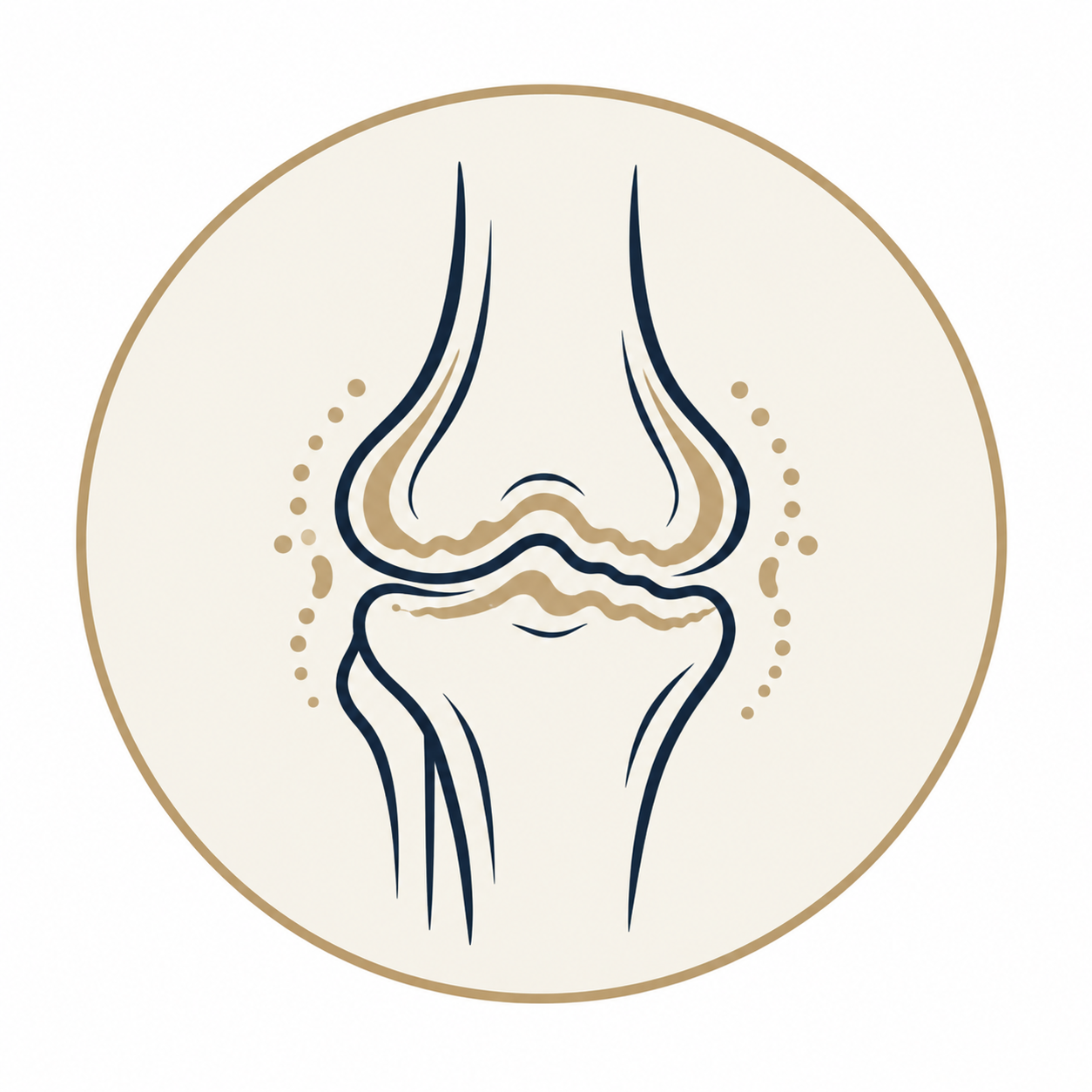
Cartilage gradually wears away over time, causing pain, stiffness and reduced movement.
An autoimmune condition that can damage the tissues within the knee joint.
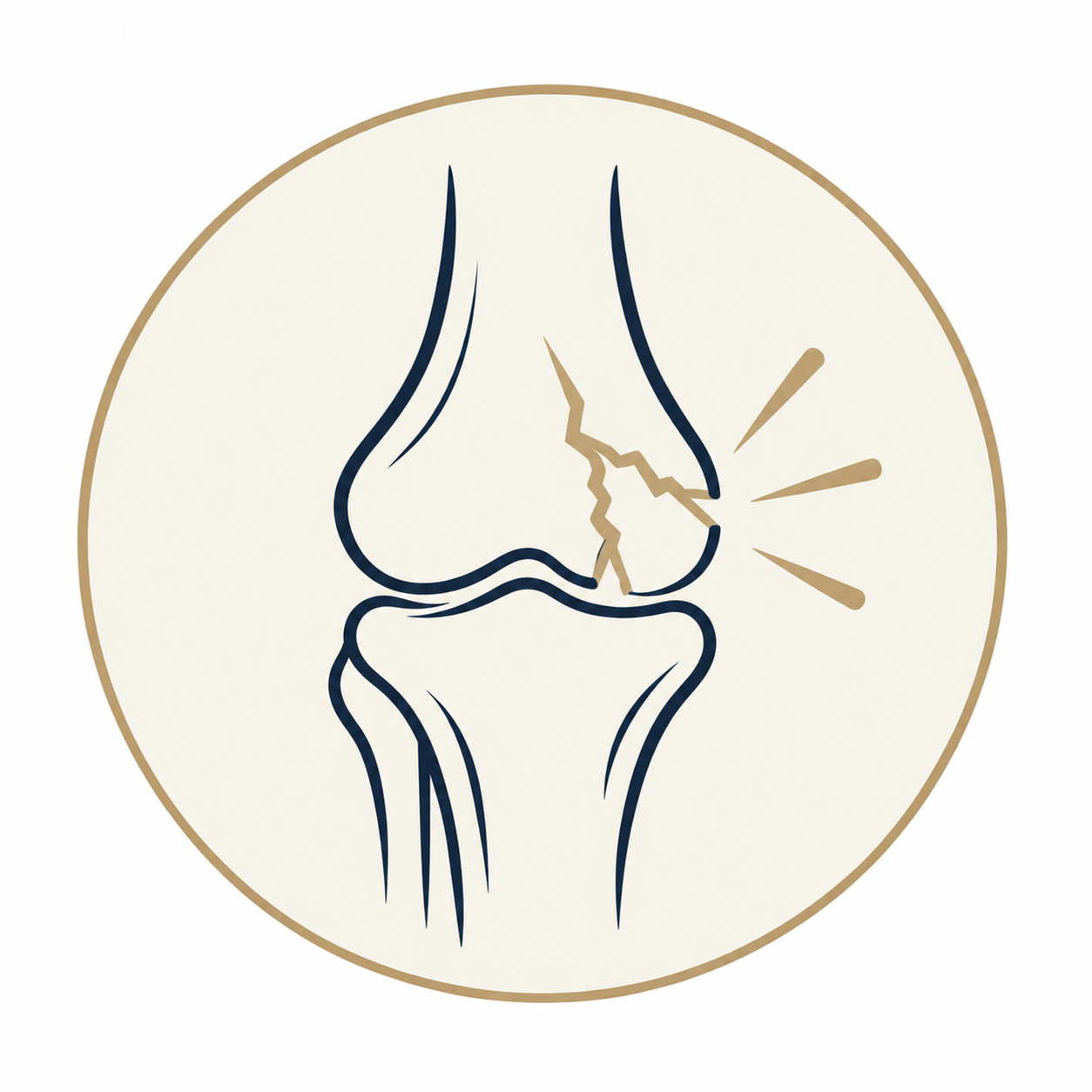
Joint damage that develops following a fracture or significant injury.
Knee replacement is not a single procedure. Depending on the location and extent of joint damage, your surgeon may recommend either a total or a partial knee replacement.
| Total knee replacement | Partial knee replacement | |
|---|---|---|
| What is replaced | Tibia + femur and/or patella compartments of the knee joint | Only the damaged compartment |
| Best suited for | Widespread arthritis affecting the whole joint | Isolated arthritis in one compartment only |
| Recovery | Gradual return to activity over several months | Often quicker recovery |
| Feel of the knee | Restored alignment and stability | May feel more natural after recovery |
| Longevity of the replacement | Good long-term outcomes | May require second knee replacement depending on patient activity levels |
Your surgeon will assess your imaging, symptoms, and anatomy to determine which procedure is right for you.
It is most commonly recommended for people with significant joint damage caused by:
| Condition | What it means |
|---|---|
| Osteoarthritis | Cartilage gradually wears away over time |
| Rheumatoid arthritis | An autoimmune condition that damages joint tissue |
| Post-traumatic arthritis | Joint damage following a fracture or injury |
Surgery is considered when these options have been explored and the knee is no longer responding well to them.
Your GP knows your history and is best placed to assess whether specialist input is the right next step. If knee pain is affecting the things you do every day, that is a conversation worth having with them. They can assess your situation, arrange imaging if needed, and refer you to an orthopaedic surgeon if appropriate.
AOS surgeons regularly use robotic-assisted technology for knee replacement surgery. It is an advanced technique in the field of joint replacement surgery, and allows personalisation of knee replacements using modern balancing techniques.
The robotic system does not operate independently. Your surgeon remains in full control throughout the procedure. The technology works as a precision tool, using detailed pre-operative imaging of your knee to create a patient-specific plan before a single incision is made.
During surgery, that plan guides real-time decisions about bone preparation, implant sizing, implant placement, and knee ligament balancing. The result is a procedure that is closely tailored to your individual anatomy from the outset.
Conventional knee replacement is a well-established procedure with a long track record, and skilled surgeons perform it successfully every day. Robotic assistance adds a layer of intraoperative data and planning integration that allows for a more individualised approach, particularly in how implant alignment and soft tissue balance are managed.
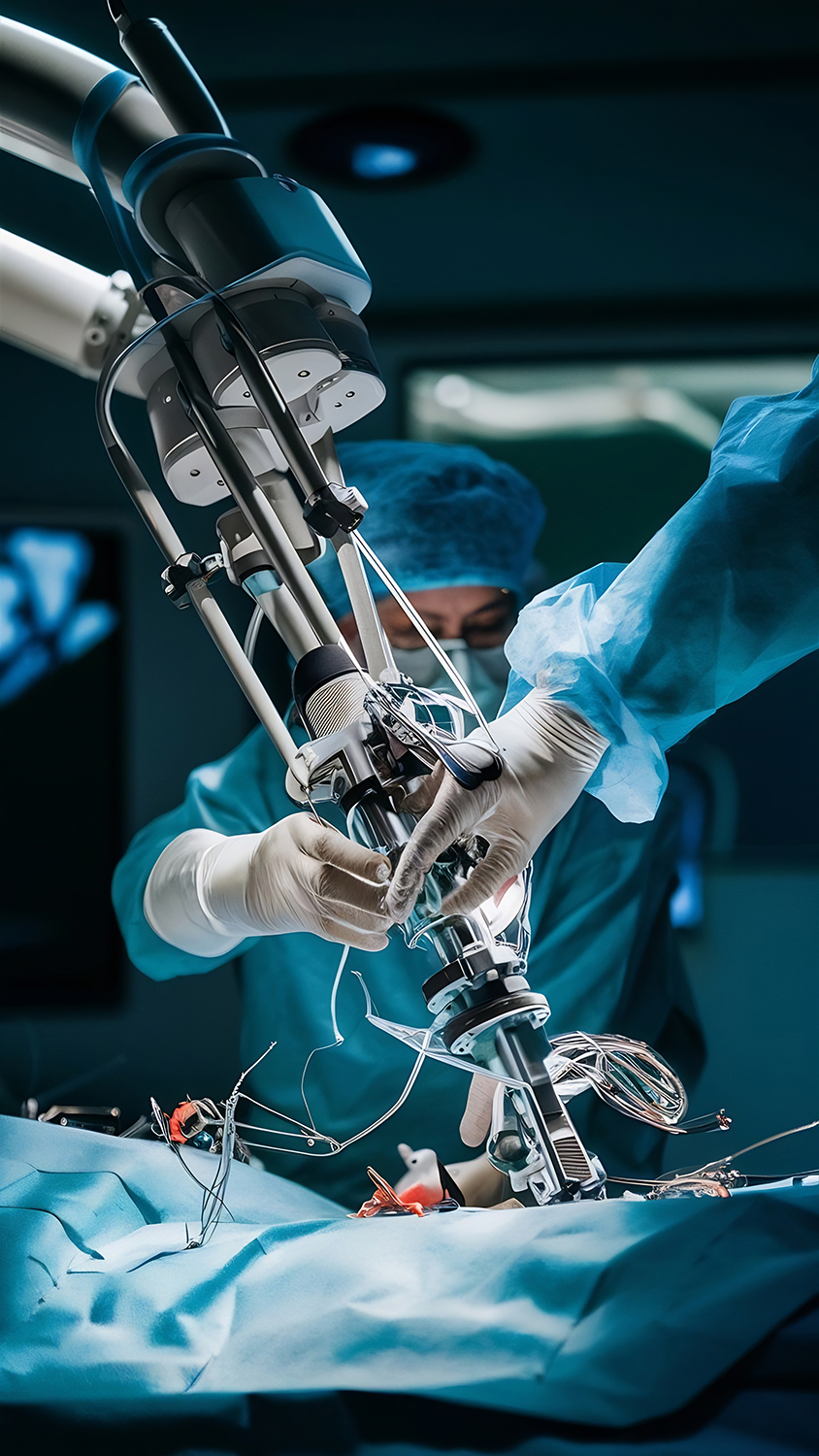
There may be circumstances where your surgeon determines that a conventional approach is more appropriate. This will always be based on what is best for your individual situation, and your surgeon will discuss their approach with you before surgery.
AOS surgeons also use a technique called kinematic alignment, which positions the implant to closely match your knee’s natural anatomy and movement patterns, respecting the knee’s ligaments and soft tissues. The aim is a knee that moves and feels as close to natural as possible after recovery, with minimal soft tissue releases.
Robotic technology and kinematic alignment are often used together, with the robotic system helping execute the personalised alignment plan throughout the procedure.
Your surgeon will discuss the approach planned for your surgery at your consultation.
Your first consultation
Every recommendation is made with you, based on your individual circumstances.
Once surgery is planned, your care team will guide you through the weeks ahead. This typically includes:
Your first consultation
Once referred to an AOS surgeon, your first appointment is a conversation to understand your situation before anything else.
Every recommendation is made with you, based on your individual circumstances.
Once surgery is planned, your care team will guide you through the weeks ahead. This typically includes:
The procedure is performed under general or spinal anaesthetic and typically takes 1 to 1.5 hours.
Your surgeon removes the damaged surfaces from the end of your thigh bone (femur), the top of your shin bone (tibia), and sometimes the back of your kneecap. These are replaced with an implant made from metal and high-grade plastic, fixed in place with either bone cement or a specially designed porous surface that bone grows into. Sometimes a combination of both is required.
Where robotic-assisted surgery is used, your pre-operative plan guides precision bone cuts and implant placement throughout the procedure.
The goal: smooth joint movement, reduced bone loss and improved soft tissue balancing.
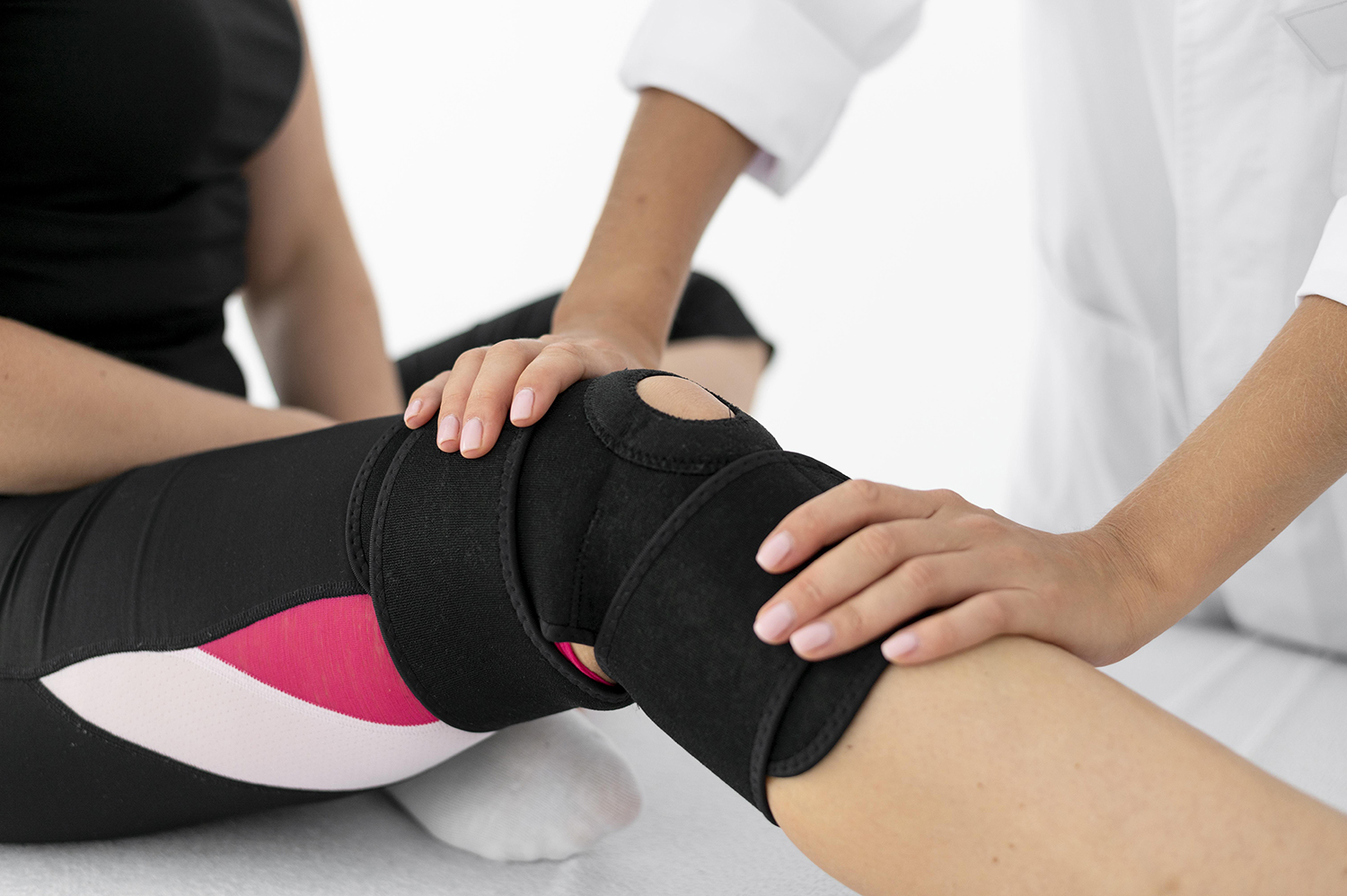
The aim is to reduce pain and help you return to the activities that matter to you. For some people that means regular walks. For others, managing stairs comfortably, sleeping well, or returning to low-impact activity.
Your surgeon will discuss realistic expectations based on your individual situation. Recovery is a partnership between you, your surgeon, and your rehabilitation team.
Recovery varies from person to person. Your age, overall health, fitness before surgery, and the extent of joint damage all play a role. Your surgeon will walk you through what to expect for your specific situation.
Here is a general picture of what the stages involve:
The aim is to reduce pain and help you return to the activities that matter to you. For some people that means regular walks. For others, managing stairs comfortably, sleeping well, or returning to low-impact activity.
Your surgeon will discuss realistic expectations based on your individual situation. Recovery is a partnership between you, your surgeon, and your rehabilitation team.
As with all surgical procedures, a total knee replacement carries risks. Your surgeon will explain these in detail so you can make an informed decision.
Serious complications are uncommon. Your surgeon will assess your individual health carefully before recommending surgery. The conversation about risk is part of every consultation.
Specialist expertise, applied to you Each AOS surgeon brings sub-specialty experience to knee surgery. A thorough understanding of the joint, the procedure, and the factors that shape individual recovery, applied to your specific anatomy and goals.
A considered process Your consultation is a thorough assessment of your condition, your history, and what matters to you. The right treatment is always the one that makes sense for your situation.
You will always know where you stand From your first appointment through to follow-up care, your surgeon will explain what is happening and why. Clear language. Honest timelines. No surprises.
Getting back to what matters The measure of a good outcome is you returning to the life you want to lead. AOS works with trusted rehabilitation partners to support your recovery, and your surgeon stays engaged with your progress well beyond the procedure itself.
If you have been referred to an AOS surgeon, or your GP has suggested a specialist opinion may be helpful, we are here to assist.
A knee replacement is typically considered when significant joint damage is causing ongoing pain that affects daily life, and conservative measures have stopped working. If knee pain is affecting the things you do every day, a conversation with your GP is a good place to start, to arrange a referral to see an Orthopaedic Surgeon..
A total knee replacement resurfaces the whole joint. A partial knee replacement addresses only the damaged compartment, preserving healthy cartilage, ligaments, and bone in the rest of the knee. The right procedure depends on the extent and location of your arthritis, assessed through imaging and a clinical examination.
Robotic-assisted surgery uses computer-assisted technology, integrated with detailed pre-operative imaging, to support your surgeon in planning and performing the knee replacement. Your surgeon remains in full control throughout. The system provides real-time data during surgery to improve the accuracy of bone preparation and implant placement based on a plan tailored to your individual anatomy. AOS surgeons regularly use this technology for both total and partial knee replacements, though the approach for your surgery will always be discussed with you at your consultation.
Kinematic alignment is a surgical technique that positions the implant to closely match your knee’s natural anatomy and movement patterns, reducing the need for soft tissue releases. The aim is a knee that moves and feels as natural as possible after recovery. AOS surgeons use kinematic alignment, often in combination with robotic technology.
Your surgeon removes the damaged surfaces from the knee joint and replaces them with a carefully fitted implant. Where robotic assistance is used, it guides precision cuts and implant placement throughout. The surgery is performed under anaesthetic and typically takes 1 to 1.5 hours.
Typically 1 to 1.5 hours, not including time in the anaesthetic room and recovery area. Your care team will give you a clear picture of what your day at hospital will look like.
Most people are discharged within 2 to 3 days. Your care team will plan your discharge before you are admitted, so arrangements are in place well ahead of time.
Recovery depends on individual factors including age, overall health, and pre-surgery fitness. Most people are walking with assistance the day after surgery. Many people notice significant improvement by 6 to 8 weeks, with physiotherapy playing an important role throughout. Your surgeon will discuss what to expect at your consultation.
Most people can return to driving around 4 to 6 weeks after surgery, depending on which knee was operated on and how recovery is progressing. Always wait until you have been given the all clear by your surgeon.
People with desk-based roles often return around 4 to 6 weeks after surgery. More physically demanding roles may require longer. Your surgeon will advise based on your individual situation and job requirements.
Physiotherapy begins the day after surgery and continues through your recovery at home. The amount varies depending on your progress. AOS works with trusted rehabilitation partners to support your return to movement.
According to data from the Australian Orthopaedic Association National Joint Replacement Registry (AOANJRR), the majority of knee replacements are still functioning well at 20 years. It is reasonable to expect that the knee replacement could last longer than this, but depends on individual factors including activity levels, body weight, and implant type. Your surgeon will discuss what you can realistically expect at your consultation.
Source: Australian Orthopaedic Association National Joint Replacement Registry Annual Report — aoanjrr.sahmri.com
The cost depends on your private health insurance, the hospital you attend, and your individual circumstances. AOS surgeons operate at private hospitals in Adelaide and surrounding areas. We recommend contacting your health insurer before your consultation to understand your cover. Our practice team can assist with any questions about the process.
Yes. A referral from your GP is required to see an orthopaedic surgeon. Your GP can assess your situation, arrange imaging if needed, and refer you to an AOS surgeon for specialist care. Referrals can be via fax, email or through the website www.aos.com.au
Yes. Dr George Awwad consults in Port Pirie and Mt Barker in addition to Adelaide locations. Contact our practice team to discuss which location suits you best.
A knee replacement is typically considered when significant joint damage is causing ongoing pain that affects daily life, and conservative measures have stopped working. If knee pain is affecting the things you do every day, a conversation with your GP is a good place to start, to arrange a referral to see an Orthopaedic Surgeon..
A total knee replacement resurfaces the whole joint. A partial knee replacement addresses only the damaged compartment, preserving healthy cartilage, ligaments, and bone in the rest of the knee. The right procedure depends on the extent and location of your arthritis, assessed through imaging and a clinical examination.
Robotic-assisted surgery uses computer-assisted technology, integrated with detailed pre-operative imaging, to support your surgeon in planning and performing the knee replacement. Your surgeon remains in full control throughout. The system provides real-time data during surgery to improve the accuracy of bone preparation and implant placement based on a plan tailored to your individual anatomy. AOS surgeons regularly use this technology for both total and partial knee replacements, though the approach for your surgery will always be discussed with you at your consultation.
Kinematic alignment is a surgical technique that positions the implant to closely match your knee’s natural anatomy and movement patterns, reducing the need for soft tissue releases. The aim is a knee that moves and feels as natural as possible after recovery. AOS surgeons use kinematic alignment, often in combination with robotic technology.
Your surgeon removes the damaged surfaces from the knee joint and replaces them with a carefully fitted implant. Where robotic assistance is used, it guides precision cuts and implant placement throughout. The surgery is performed under anaesthetic and typically takes 1 to 1.5 hours.
Typically 1 to 1.5 hours, not including time in the anaesthetic room and recovery area. Your care team will give you a clear picture of what your day at hospital will look like.
Most people are discharged within 2 to 3 days. Your care team will plan your discharge before you are admitted, so arrangements are in place well ahead of time.
Recovery depends on individual factors including age, overall health, and pre-surgery fitness. Most people are walking with assistance the day after surgery. Many people notice significant improvement by 6 to 8 weeks, with physiotherapy playing an important role throughout. Your surgeon will discuss what to expect at your consultation.
Most people can return to driving around 4 to 6 weeks after surgery, depending on which knee was operated on and how recovery is progressing. Always wait until you have been given the all clear by your surgeon.
People with desk-based roles often return around 4 to 6 weeks after surgery. More physically demanding roles may require longer. Your surgeon will advise based on your individual situation and job requirements.
Physiotherapy begins the day after surgery and continues through your recovery at home. The amount varies depending on your progress. AOS works with trusted rehabilitation partners to support your return to movement.
According to data from the Australian Orthopaedic Association National Joint Replacement Registry (AOANJRR), the majority of knee replacements are still functioning well at 20 years. It is reasonable to expect that the knee replacement could last longer than this, but depends on individual factors including activity levels, body weight, and implant type. Your surgeon will discuss what you can realistically expect at your consultation.
Source: Australian Orthopaedic Association National Joint Replacement Registry Annual Report — aoanjrr.sahmri.com
The cost depends on your private health insurance, the hospital you attend, and your individual circumstances. AOS surgeons operate at private hospitals in Adelaide and surrounding areas. We recommend contacting your health insurer before your consultation to understand your cover. Our practice team can assist with any questions about the process.
Yes. A referral from your GP is required to see an orthopaedic surgeon. Your GP can assess your situation, arrange imaging if needed, and refer you to an AOS surgeon for specialist care. Referrals can be via fax, email or through the website www.aos.com.au
Yes. Dr George Awwad consults in Port Pirie and Mt Barker in addition to Adelaide locations. Contact our practice team to discuss which location suits you best.